Many opportunities in the rail industry for women, say industry professionals


Rail industry professionals, including an industrial engineer, two chartered accountants and an ergonomist, have urged Grade 9 learners to pursue careers in the rail industry, which requires a range of skills across its ecosystem.
The professionals spoke during rail services company Traxtion’s Rail Fare 2026 exhibition, which serves as a rail technology expo for high school learners.
While society often stereotypes different preferred professions between genders, the four women leaders noted that education, experience and accomplishments were earned merits that would enable the learners to successfully pursue any career in the rail industry.
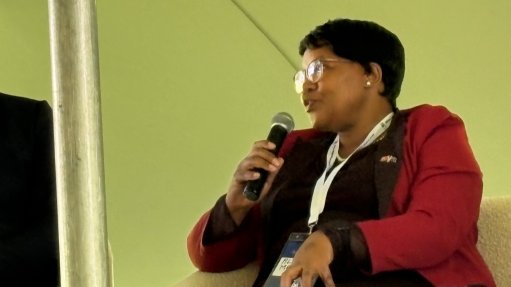
South Africa Railway Safety Regulator Permit Assessments senior manager Sethunya Matsie, State-owned rail operator Transnet Monitoring and Reporting Portfolio senior manager Pelma Maja, State-owned Passenger Rail Agency of South Africa Rail Operations CEO Nwabisa Gqamane-Ntiyane and industry body naamsa | The Automotive Business Council chief economist Dr Paulina Mamogobo spoke to the young scholars.
“I was raised in a family that emphasised discipline, dedication and determination. These stood me in good stead in my career,” Gqamane-Ntiyane said during the August 21 exhibition.
She further encouraged learners to continue to learn and develop once they have started their careers, as knowledge and development must be earned.
Gqamane-Ntiyane is an industrial engineer by training.
“There are many opportunities in the rail industry, and not only in terms of trains and engineering. As part of my bursary, I was selected to serve in the rail sector,” said Maja, a chartered accountant.
“I completed my articles and learned that [the rail industry] is a place where I can grow as a young, professional black African woman. You should each take opportunities where they are present, and you must want to learn and grow every day in your profession,” she urged the students.
However, she also highlighted that some choices made by girls in high school created barriers to growing the presence of women in the rail sector.
Maja and Gqamane-Ntiyane both professed a fondness for mathematics and science, and urged the school-goers to elect these subjects.
“The proportion of women in rail-related jobs in South Africa is 26%. This is higher than the 23% in Europe, but where are the rest? Women can do these jobs and should be empowered to participate,” Gqamane-Ntiyane said.
However, if youngsters do not take mathematics and science as subjects, this limits the number of women coming into the industry, noted Maja.
Further, some women exit the industry after a few years, added Matsie.
“We must instil confidence into women entering the industry and create meaningful pathways for them to grow into their professions in the industry. They should have a mindset of being able to enter every arena,” she said.
She also added that women in technical positions are sometimes given mundane work and excluded from technical projects. This further limits their development in the industry, as engineering must be practised and engineers must gain practical experience, she warned.
Matsie is a human-factor engineer by training.
To address this, Mamogobo, who is also a chartered accountant, urged companies to be intentional about bringing in women into the industry, particularly through mentoring programmes, which expose young people to the practices and operations of a profession in the industry.
However, she similarly urged the high school learners to be intentional about building their professional pathways, and to start to see themselves as people who can provide value and, eventually, lead within companies and in the industry.
Meanwhile, Maja proposed that South Africa should seek to achieve 30% to 35% female representation in the rail industry by 2030.
While this may seem incremental, change is gradual and takes time and there is a lot of work that needs to be done to reach this level, she said.
Maja also highlighted some persisting challenges, such as insufficient ablution facilities for females in the rail industry, but also urged women to guide new women entering the industry.
Providing mentorship for women entering the industry and showcasing the opportunities in the rail industry to girls at school are needed to boost the participation of women in the industry, she said.
Mamogobo also urged the school-goers to work towards their career goals.
“Even if you are not sure what you want to do, understand that each milestone reached leads to more that can be reached.”
Article Enquiry
Email Article
Save Article
Feedback
To advertise email advertising@creamermedia.co.za or click here
Projects

Latest Multimedia
Latest News
Showroom
Supplier & Distributor of the Widest Range of Accurate & Easy-to-Use Alcohol Breathalysers
VISIT SHOWROOM
Rio Carb is an OEM (Original Equipment Manufacturer) of R-C700 Chromium Carbide (CrC) alloy clad wear plates and pipes used for heavy materials...
VISIT SHOWROOM

Press Office
Announcements
What's On
Subscribe to improve your user experience...
Option 1 (equivalent of R125 a month):
Receive a weekly copy of Creamer Media's Engineering News & Mining Weekly magazine
(print copy for those in South Africa and e-magazine for those outside of South Africa)
Receive daily email newsletters
Access to full search results
Access archive of magazine back copies
Access to Projects in Progress
Access to ONE Research Report of your choice in PDF format
Option 2 (equivalent of R375 a month):
All benefits from Option 1
PLUS
Access to Creamer Media's Research Channel Africa for ALL Research Reports, in PDF format, on various industrial and mining sectors
including Electricity; Water; Energy Transition; Hydrogen; Roads, Rail and Ports; Coal; Gold; Platinum; Battery Metals; etc.
Already a subscriber?
Forgotten your password?
Receive weekly copy of Creamer Media's Engineering News & Mining Weekly magazine (print copy for those in South Africa and e-magazine for those outside of South Africa)
➕
Recieve daily email newsletters
➕
Access to full search results
➕
Access archive of magazine back copies
➕
Access to Projects in Progress
➕
Access to ONE Research Report of your choice in PDF format
RESEARCH CHANNEL AFRICA
R4500 (equivalent of R375 a month)
SUBSCRIBEAll benefits from Option 1
➕
Access to Creamer Media's Research Channel Africa for ALL Research Reports on various industrial and mining sectors, in PDF format, including on:
Electricity
➕
Water
➕
Energy Transition
➕
Hydrogen
➕
Roads, Rail and Ports
➕
Coal
➕
Gold
➕
Platinum
➕
Battery Metals
➕
etc.
Receive all benefits from Option 1 or Option 2 delivered to numerous people at your company
➕
Multiple User names and Passwords for simultaneous log-ins
➕
Intranet integration access to all in your organisation